
How to spot false breakouts in ETF trading
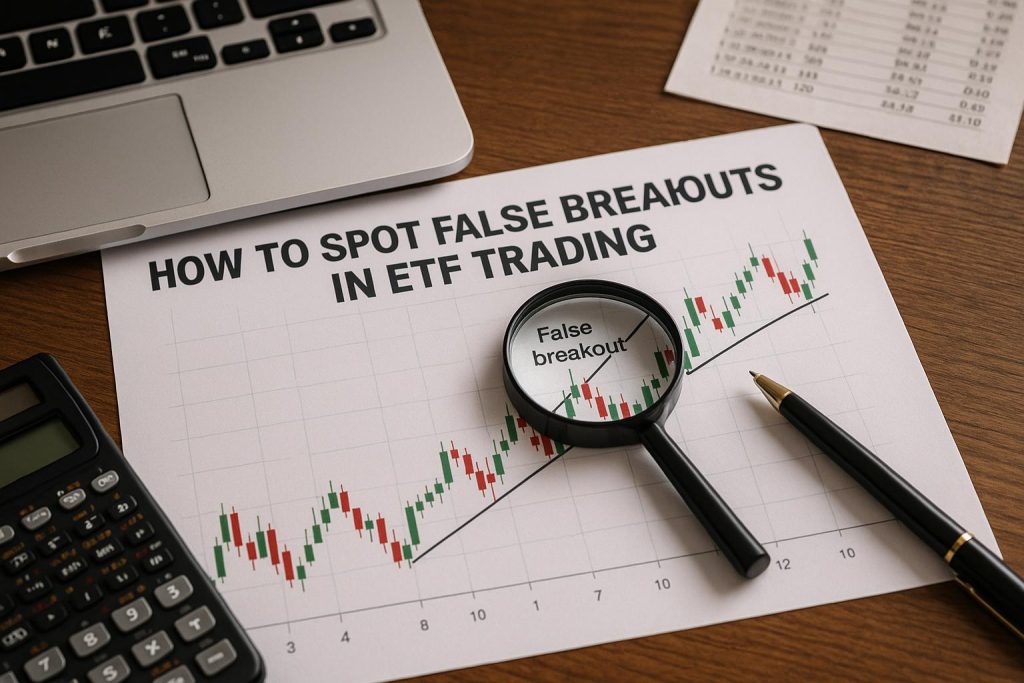
Understanding False Breakouts in ETF Trading
In the world of Exchange-Traded Funds (ETFs), the concept of breakouts is pivotal for traders looking to capitalize on significant price movements. A breakout occurs when the price of an ETF moves outside a defined level of support or resistance with increased volume. However, not all breakouts result in sustained price movements, leading to what is known as a false breakout. Understanding these phenomena is crucial for traders aiming to optimize their strategies and minimize potential losses.
Characteristics of False Breakouts
False breakouts can often mislead traders by giving the impression of a new trend when the market is merely reacting to short-term factors. Understanding the characteristics of false breakouts in ETF trading can help traders minimize losses and make more informed decisions.
Lack of Volume
A critical indicator of a breakout’s validity is trading volume. A true breakout is typically accompanied by a significant increase in volume, indicating strong market interest. In contrast, a false breakout may occur on low volume, suggesting that the move lacks the necessary momentum to sustain itself. Trading volume acts like a magnifying glass, bringing clarity to the intentions behind market movements. Without a notable rise in volume, the legitimacy of a breakout is often in question, leading traders to suspect a weaker commitment from the market participants.
Quick Reversal
Another hallmark of a false breakout is a quick reversal in price. After briefly moving beyond a resistance or support level, the price often retreats to its previous trading range if the breakout is false. This retracement may happen within just a few trading periods. The rapid reversal indicates that the breakout was not backed by strong consensus among traders, and the push beyond previous levels was likely unsustainable.
Market Context
The broader market context often gives clues about the sustainability of a breakout. If the overall market trend contradicts the breakout, there is a higher chance that it could be false. Traders should consider overarching market trends, macroeconomic indicators, and news events for comprehensive analysis. By aligning the breakout with the larger market sentiment, traders can assess whether the movement is part of a genuine market shift or merely a temporary anomaly.
Strategies to Spot False Breakouts
Identifying false breakouts involves a mix of technical analysis and strategic observation. Employing certain strategies can help traders reduce exposure to these deceptive movements.
Technical Indicators
Leveraging technical indicators can provide deeper insights into price movements. Tools such as the Relative Strength Index (RSI), Moving Average Convergence Divergence (MACD), and Bollinger Bands can be utilized to assess the strength of a breakout. For instance, if the RSI is reading overbought, it might indicate a weaker breakout. These indicators serve as supplementary tools that traders can employ alongside volume analysis to further validate or refute a breakout, providing a multi-faceted view of market conditions.
Confirmation with Time Frame Analysis
Using multiple time frames for analysis provides a more substantial confirmation of a breakout. If a price breakout is visible on a smaller time frame but not corroborated by broader time frames, it could suggest a false breakout. Observing price action over different time frames allows traders to discern short-term noise from long-term trends, thereby enhancing the accuracy of their breakout assessments.
Monitoring News and Events
Market reactions to news events can lead to short-lived breakouts. Traders should stay informed about relevant economic announcements and geopolitical events through reliable financial news sources to discern if a breakout is news-driven and likely to falter. The impact of news events can cause abrupt, temporary shifts in market sentiment, which may not always translate into long-term trends.
Conclusion
Spotting false breakouts in ETF trading requires a keen understanding of market behavior, the application of technical analysis, and the ability to contextualize market movements. By recognizing the signs of false breakouts, traders can improve their trading strategies and enhance their ability to navigate the ETF market with precision. For detailed insights into market dynamics and trading strategies, consider exploring specialized financial blogs and market analysis platforms like Investopedia.
Understanding and identifying false breakouts are critical skills for traders in the ETF market. Engaging with volume analysis, technical indicators, multi-time frame strategies, and news monitoring collectively contributes to a robust trading strategy. Traders can strive to minimize the impact of these misleading market movements by viewing breakouts not in isolation but within the broader context of market behavior and sentiment.
Moreover, continuous learning and adaptation to market conditions remain essential. The landscape of ETF trading is complex, and false breakouts represent just one of the many challenges traders face. By remaining informed and adaptable, traders can better equip themselves to manage uncertainties while seeking lucrative opportunities in the market.
Through experience, careful analysis, and strategic application of trading tools, market participants can gradually hone their ability to distinguish between genuine and false breakouts, ultimately refining their trading acumen and enhancing their success potential in the dynamic ETF market.
This article was last updated on: June 12, 2026