
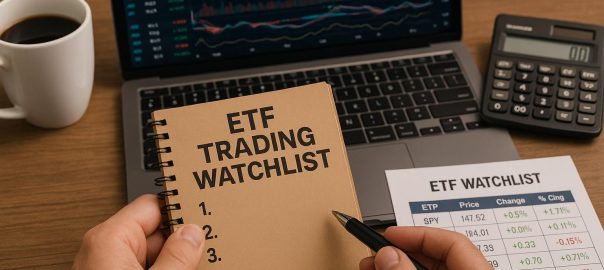
Understanding ETFs
Exchange-Traded Funds (ETFs) serve as a pivotal component in the financial markets by offering a versatile way to engage with a diversified portfolio without the need to purchase the individual assets themselves. Traded similarly to stocks on the exchange, ETFs provide investors with an opportunity to partake in a collection of assets ranging from equities to bonds and commodities. Gaining a comprehensive understanding of ETFs is imperative for investors. This understanding not only aids in the effective curation of a trading watchlist but also empowers investors to make informed decisions that align with their strategic and financial aspirations.
Selecting ETFs for Your Watchlist
The process of formulating an ETF trading watchlist begins with introspection about your investment objectives and corresponding strategies. Identifying these goals helps in creating a watchlist that reflects your financial aspirations. The following categories are foundational when considering ETFs:
1. Equity ETFs: These are specifically designed to provide exposure to stock markets. By investing in a collection of stocks, equity ETFs often aim to track the performance of specific indices, such as the S&P 500. Tracking such benchmarks allows investors to gauge their performance against widely acknowledged standards.
2. Bond ETFs: These ETFs offer a basket of fixed-income products including government, municipal, or corporate bonds. They are particularly useful for investors with an income-focused perspective or those looking to stabilize their portfolio amidst stock market volatility.
3. Commodity ETFs: These provide direct exposure to physical commodities, offering access to markets that might be less approachable for individual investors. Whether it’s precious metals like gold, energy products such as oil, or agricultural commodities, these ETFs can offer portfolio diversification.
4. Sector and Industry ETFs: Focused on particular economic sectors, these ETFs can target segments such as technology, healthcare, or utilities. Being strategic in sector selection can align with prevailing market conditions or capitalize on burgeoning market innovations.
Research and Analysis
To craft an effective ETF watchlist, engaging in comprehensive research and analysis is indispensable. Key factors that merit attention include:
Expense Ratio: A vital metric, the expense ratio reflects the annual management fees as a percentage of the fund’s total assets. Lower ratios can bolster long-term gains, making this a crucial consideration during ETF selection.
Liquidity: Assessing the trading volume of an ETF is critical. Higher liquidity is indicative of better volume and tighter bid-ask spreads, which, in turn, can minimize transaction costs for investors.
Historical Performance: While past returns do not guarantee future performance, examining historical data can provide valuable insights into an ETF’s resilience and adaptability to varied market conditions and economic environments.
Underlying Index Composition: Understanding the index that an ETF seeks to mirror gives investors insights into potential market risks and opportunities, allowing for more strategic investment decisions.
Utilizing Financial Tools and Platforms
Maintaining an organized and current ETF trading watchlist necessitates using advanced financial tools and resources. These platforms assist in detailed analysis and comparison:
Morningstar’s ETF Screener: This tool provides in-depth analysis, enabling users to compare ETFs across multiple criteria, making it a valuable resource for data-driven decisions.
Bloomberg ETF Screener: Known for its expansive data and insights into the ETF markets, Bloomberg’s tool helps investors remain informed and adjust their watchlist as necessary, reflecting real-time market developments.
Regularly Review and Update
An ETF trading watchlist is a dynamic tool that requires regular updates. Consistent evaluations should be informed by shifts in market trends, evolving economic landscapes, and personal financial goals. Staying alert to macroeconomic indicators, regulatory changes, and sector-specific evolutions that can influence ETF performance is vital for maintaining a relevant and effective watchlist.
Conclusion
The development of a successful ETF trading watchlist is a multifaceted endeavor that requires deep insights into various types of ETFs, meticulous research, and leveraging advanced analytical tools. By staying informed and proactive, investors can adeptly navigate changing market dynamics and refine their investment strategies to optimize portfolio performance.
This article was last updated on: September 26, 2026